Guides / For Shops
Change Notification to Bike Brands: Anodizer, Bar Supplier or Process Changes
November 21, 2026
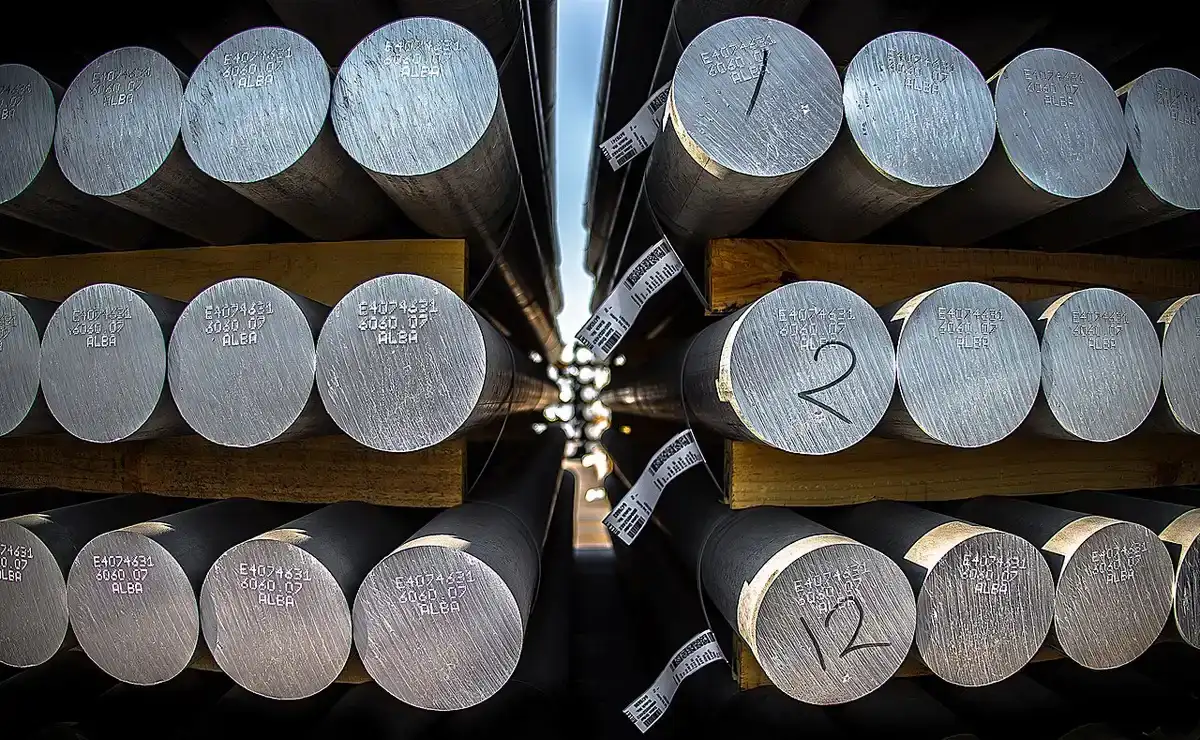
A bike brand approves a part, not a drawing. It tested a specific stem or crank, made from a specific bar, machined on a specific route and finished by a specific anodizer, and the fatigue report and the color master belong to that part. A shop that changes one of those things without saying so has changed the part the brand approved, and the brand finds out when a color goes off or a test fails. This guide lists the changes to tell the brand about, the ones that can wait for the lot record, and the notice and log to use.
Why brands care about changes they cannot see
A brand cannot see your bar supplier. It cannot see which tank an anodize batch ran in. What it sees is the finished part, and a part can look right and differ in the two properties that matter most on a bike component: how long it lasts under load and whether its color matches the rest of the range.
Practitioners in manufacturing manage this with change control. Production Part Approval Process (PPAP), the automotive scheme published by AIAG, asks suppliers to get approval from the vehicle maker when a new or modified component enters production or when the manufacturing process changes, according to Wikipedia’s summary. Bike parts have no such scheme, and we found no public bike standard that sets one. A shop can borrow the idea without the paperwork: tell the brand before the change reaches a shipment, and let the brand decide what it needs to see.
ISO 9001:2015 has a clause on control of changes, clause 8.5.6. Practitioner summaries describe it as asking an organization to review changes before they take effect, have them authorized and keep a record of the review and the actions. That is about your own system. It does not tell you what to report to a customer, so the brand’s quality agreement does that job. Our guide to quality agreement clauses shows where a notice clause sits, and the page on a minimal quality system for bike brands lists change approval as one of ten habits.
Changes that need notice: material, temper, anodizer, heat treat, peening
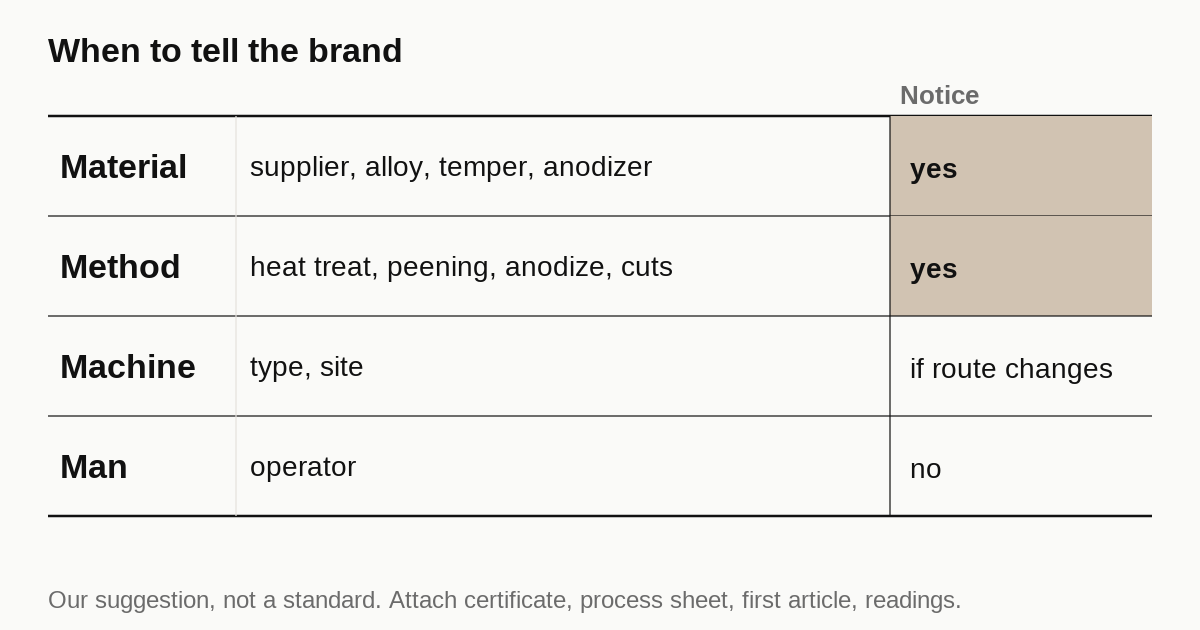
Manufacturers often sort changes into four groups called the 4M: man, machine, material and method. Japanese manufacturing sources describe 4M change management as evaluating changes to those four factors before they are made, so that quality does not drift. The table adapts the idea to a machined, anodized bike part. It is our suggestion, not a standard, so agree the final list with each brand.
| 4M | Change | Example | Tell the brand before next batch? | What to attach |
|---|---|---|---|---|
| Material | Bar supplier or mill | New mill for 6061 or 7075 bar | Yes | New mill certificate, alloy and temper, product form |
| Material | Alloy or temper | 7075-T6 swapped for 7075-T73, or the reverse | Yes, and needs the brand’s approval | Certificate, conductivity and hardness readings |
| Material | Product form | Extruded bar replaced by forged or rolled stock | Yes | Certificate and the reason |
| Material | Anodize supplier, dye or seal | New finisher, new dye supplier, new seal | Yes | Finisher’s process sheet, thickness range, color sample |
| Machine | Machine or site | Part moved to a different machine type or another building | Yes if the process route changes | Setup sheet, first article report |
| Method | Heat treat or stress relief | New cycle, new heat treater | Yes | Cycle record |
| Method | Shot peening | Added, removed or changed intensity | Yes | Peening report |
| Method | Anodize thickness or type | Type II to Type III, or a thicker range | Yes | Thickness data, dimensions after finish |
| Method | Cutting method on critical areas | Different tool path or tool on a fillet or a bore | Yes if the surface or geometry differs | First article report |
| Method | Inspection method or gauge | New CMM program, new gauge type | Yes if it changes what is measured | Gauge R&R or comparison readings |
| Man | Operator | New operator on an approved route | No | Training record in your file |
A few of these deserve a sentence each.
Bar supplier and temper. A bar of the wrong temper looks the same and machines the same. Our page on verifying 7075-T73 quotes a public US Army inspection manual: conductivity of 30.0 to 35.0 percent IACS for 7075-T6 and 38.0 to 42.5 for 7075-T73. The ranges are for sorting tempers, not for acceptance. Our article on 7075-T6 and T73 explains why the choice matters. If the supplier changes, the brand should see the new certificate and, for T73, the readings.
Anodizer. Color depends on alloy, thickness and dye bath, as our guide to color matching explains, and the anodizer’s guide covers what the finisher controls. A new finisher can hold the same drawing callout and deliver a different black. Anodize also changes size: Wikipedia describes the usual growth as half the oxide thickness outward on each surface, so a changed thickness range moves bores and threads that were machined to suit the old one.
Changes that do not need notice
Over-reporting trains a brand to ignore notices. Keep these in your own records and mention them only if the brand’s agreement asks:
- a new lot from the same supplier to the same specification, with its certificate;
- a tool change within the same tool type and cutting data;
- preventive maintenance and calibration on the same machine;
- a new operator trained on the approved route;
- a new revision of your internal setup sheet that does not change the process.
If you are unsure which side a change falls on, ask once, write down the answer and add it to the notice rules for that brand. A short list agreed in advance prevents most arguments.
Need a quote for this part? Get a quote for your bike parts
The change notice and the evidence to attach
A notice should reach the brand before the next batch ships and in a form it can file. Keep it to one page.
Change notice, ready to copy.
Subject: Change notice, [part number] rev [X]
Date of notice: [date] Change: [what changes, from what to what] Reason: [one sentence] First batch affected: [order or lot, planned ship date] Parts already shipped: [not affected / affected, lot codes] Evidence attached: [certificate, process sheet, first article report, readings] Our assessment: [no effect expected / may affect fatigue / may affect color / may affect fit, and why] What we need from you: [approve, retest, none] Contact: [name], reply within 24 business hours
State your assessment but do not close the question. The brand knows the load case and the test history, and the decision on a retest is the brand’s.
Re-testing after a change: when fatigue or color must be redone
A fatigue report belongs to the part as tested, so a change that touches the properties the test measured can invalidate it. Our page on what brands need from a test lab explains why anodized and bare samples are not interchangeable. In practice, in our view, these are the changes most likely to trigger a repeat of the fatigue test:
- a new alloy, temper or bar source;
- a change in anodize type or thickness;
- the addition or removal of peening;
- a geometry or surface change on a highly stressed area.
Color needs its own check after a new anodizer, dye, seal, alloy source or thickness range. Run a pilot lot and compare it with the master sample before the production batch is finished.
Give the brand the facts and a recommendation, then wait for its decision. A shop that says “no retest needed” without the brand’s agreement is taking a risk that the brand owns.
Change log template
Keep one log per part number and add a line for every change, notified or not. A log is what you open when a brand asks what changed between two batches.
| Date | Part and revision | Change | Category (material, machine, method, man) | Notice sent (date) | Brand decision | First lot affected | Retest done |
|---|---|---|---|---|---|---|---|
Talk to us
If your shop wants bike brand work, register on the supplier page. Work requests carry the part, material, quantity, tolerance, finish and deadline. You quote us and, if price and lead time work, we place the purchase order with you. No orders are promised.
Sources
- Wikipedia, Production part approval process
- The Core Solution, ISO 9001:2015 Clause 8.5.6 explained
- Crex Group, What is 4M change management (in Japanese)
- US Army TM 1-1500-335-23, Table 4-7, electrical conductivity ranges for aluminum alloys
- Wikipedia, Anodizing
- Wikimedia Commons, Alba’s Products - Billets.jpg

Frequently asked questions
Do I have to tell a bike brand when I change my bar supplier?
Yes, if the brand's part was approved on material from the old supplier. The fatigue test and the color approval were done on that material, and a new source can change both without changing the drawing. Tell the brand before the next batch ships, attach the new mill certificate and let it decide on a retest.
Is a new lot from the same supplier a change?
Not normally. A new lot to the same specification with its certificate is routine and belongs in the lot record. A new supplier, mill, alloy, temper or product form is a change. When you are unsure which it is, ask the brand once and write the answer down.
When does a change mean new fatigue tests?
That is the brand's decision, taken with the test lab, and it depends on what changed. Material source or temper, anodize type or thickness, peening and cutting details on highly stressed areas are the changes most likely to matter. Give the brand the facts to decide. Do not decide for it.
How much notice should I give?
Enough for the brand to review before the next batch ships. We found no public rule for a notice period on bike parts, so agree a number of days with each brand and write it into the quality agreement. A late notice is worse than an early one that turns out to be unnecessary.
Need a quote for this part?
Send the drawing. We quote the finished parts, place the work with a partner shop that machines bike parts and reply within 24 business hours.
Get a quote for your bike parts