Guides / Design
Machining Dropper Post Parts: Collars, Heads and Bushing Fits
November 3, 2026
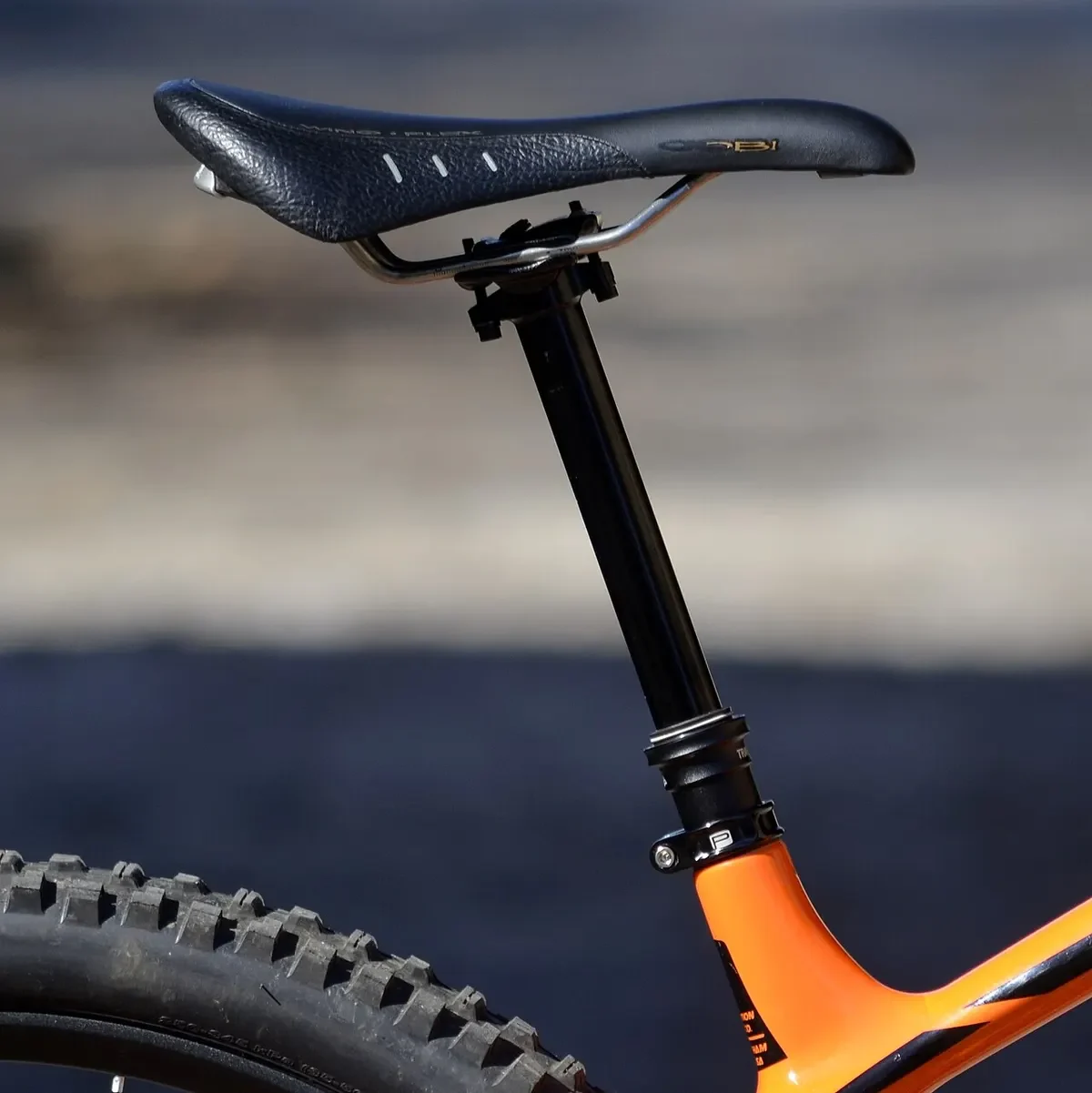
A dropper post is a seatpost made of two tubes that slide, with a cartridge inside, a collar or mid cap at the top of the seat tube, bushings and keys that guide the slide and a head that clamps the saddle rails. The machined parts are mostly the tubes, the collar, the head and its clamp. The hard part is the slide: a small gap that lets the post move and flush dirt, yet stays quiet for years. This guide covers what to put on the drawing.
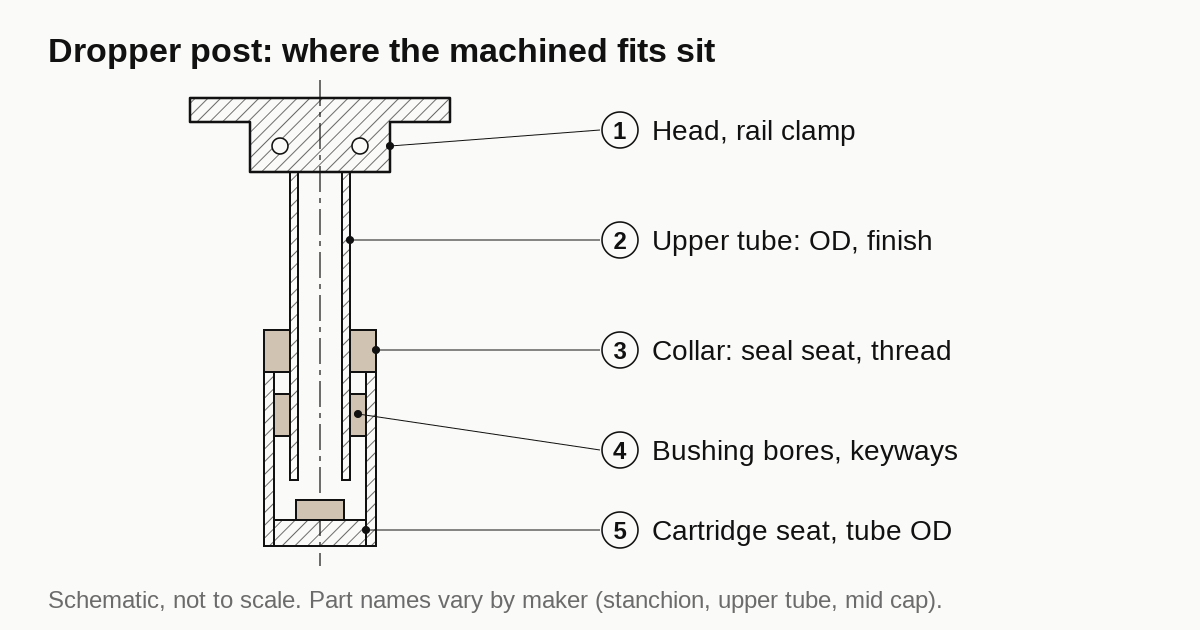
What a dropper post is made of
Wikipedia describes a dropper as a seatpost that can be lowered or raised remotely from a handlebar lever or switch, with most designs using a hydraulically damped air or coil spring and cable, hydraulic or electronic actuation. Part names differ by maker. OneUp’s V2 service page lists an upper tube, a lower tube, upper and lower split-ring bushings, three guide pins, a mid cap assembly with a rubber wiper seal and a DU bushing, a cartridge with a cartridge washer, an actuator and a four-piece seat clamp. ENVE describes a stanchion tube and a dedicated two-bolt rail clamp.
For a machine shop, that breaks into six groups:
| Part | What it does | What the drawing must control |
|---|---|---|
| Upper tube (stanchion) | Slides in the lower tube and carries the head | Outside diameter, straightness, surface finish, anodize |
| Lower tube | Fits in the seat tube and holds the bushings | Outside diameter, bushing bores, keyways |
| Collar or mid cap | Holds the seal and a bushing, closes the top | Thread, seal bore, bushing seat |
| Bushings and keys | Guide the slide | Material, bore, wall thickness (often bought in, not machined) |
| Head and clamp | Holds the saddle rails | Rail size, clamp geometry, bolt threads |
| Cartridge seat | Locates the cartridge and actuator | Bore depth, thread, sealing face |
Diameters and the seat tube
A dropper has to fit the frame. Wikipedia lists 27.2 mm as the most common seatpost diameter, with 30.9 mm used on some modern bikes. Sheldon Brown calls anything over 27.4 mm oversized and names 30.9 and 31.6 mm as common oversized diameters, but also warns that his table is reader supplied and unverified. ENVE’s dropper ships with shims for 30.9 and 31.6 mm seat tubes, which shows how a brand can cover several tubes with one post. Our own bike part standards page lists the seatpost sizes with their sources. The post outside diameter needs a tight tolerance and a stated surface finish. The tolerances guide covers how to write it.
The slide fit: what is public and what is not
No public standard gives a bushing-to-tube fit for a dropper post. OneUp’s rebuild page gives no fit tolerance or play measurement. ENVE says the cartridge, seals, keys and bushings are tested to minimize maintenance, but gives no clearance figure. So the fit is part of the design of each post, and your drawing should state it as agreed with the design team.
The one public figure is e*thirteen’s support note: a new post shows 1 to 2 mm of play when measured at the nose of the saddle. It explains that dropper posts rely on a small gap between the brass guide keys and the keyway slot to move freely and stay lubricated, and that the gap lets dirt flush out of the keyway. It adds that posts with a tighter key-to-keyway fit and less rotational play often are more service intensive and problematic. The practical lesson for a buyer is to write the requirement as a tested outcome as well as a dimension: slide force, no binding across the temperature range you test at and play measured at the saddle nose after a defined number of cycles. The bearing press fit guide shows the same approach for housing bores.
Bushing material is a separate choice. OneUp’s V2 mid cap uses a DU bushing, and its upper and lower bushings are split rings. If a bushing is polymer, the Delrin and nylon guide covers machined plastic parts. Ask the buyer whether bushings are bought in or machined, since a bought-in bushing sets the bore the shop has to match.
Finish on the upper tube
The upper tube is the wear surface under the seal and the bushing. ENVE says its stanchion tube is polished and anodized. Wikipedia’s anodizing article says anodized aluminum is harder than bare aluminum but has low to moderate wear resistance, that thicker coatings resist wear better, that sealing Type III improves corrosion resistance at the cost of abrasion resistance, and that boiling-water sealing reduces abrasion resistance by 20 percent. It also says anodizing can significantly reduce fatigue life depending on alloy and thickness, or increase it by preventing corrosion pitting. For a dropper, that means three decisions go on the drawing: coating type, thickness and sealing, plus a surface roughness figure before and after coating. The oxide grows half in and half out, so a 20 µm coating adds 10 µm per surface, and the outside diameter has to be made to a size that allows for it. The Type II versus Type III guide and the anodize growth calculator give the steps.
Need a quote for this part? Get a quote for your bike parts
Collar, thread and pressure
Many droppers hold air pressure, so the collar or mid cap carries a seal and a thread. OneUp’s V2 page lists 250 to 300 psi checked with the post fully extended, and says pump equalization can drop the reading by as much as 50 psi. That is one maker’s figure for one post, but it shows why the seal bore, the sealing face and the thread form need a surface finish and a tolerance, not just a diameter. The page also gives the seat post collar a limit of no more than 4 Nm, so the collar thread and the head clamp bolt are separate loads. Do not take either number as a standard. Put the design torque from your own post on the drawing.
Head and rail clamp
The head is close to an ordinary seatpost head, and the seatpost clamp guide covers the common geometry. Dropper heads add two demands. The clamp has to hold the saddle rails in a given position through repeated travel cycles, and it has to survive being tightened by users. ENVE’s dropper takes 7x7, oversized 7x9 and oversized 7x10 rails with a dedicated two-bolt rail clamp, and gives a torque of 5 Nm for the post hardware. OneUp lists its rear clamp bolt at 8 Nm. The values differ because the designs differ, so take the torque from the design and print it on the drawing and the part. The head and clamp are the parts where a thread milling or tapping choice matters most, because users strip them.
Wear parts and warranty
State which parts are consumables. ENVE says bushings, seals and anti-rotation keys are wear parts and not covered under its warranty or incidental damage protection. OneUp lists a service interval of 250 to 350 hours of riding. A buyer that expects a post to run 500 hours without service needs to say so, and a shop that cuts bushing seats needs to know that. Put the service interval and the wear parts list in the quote request, together with the test that defines pass.
Common mistakes
- Treating the slide fit as a normal bore tolerance. It is a designed gap.
- No finish requirement on the upper tube. The wear surface sets the post’s feel.
- Anodize on the upper tube with no growth allowance.
- Copying a torque value from another maker. Each design has its own.
- No definition of wear parts. The brand and the shop disagree later.
Send drawings, the cartridge data and the slide test requirement through the RFQ page. We quote the finished parts within 24 business hours and place the work with a partner shop with seatpost experience.
Sources
- Wikipedia, Dropper seatpost
- Wikipedia, Seatpost
- Sheldon Brown, Seatpost sizes
- OneUp Components, Dropper post V2 service and rebuild
- ENVE support, G Series Dropper Seatpost FAQ
- e*thirteen support, rotational play in the Vario dropper post
- Wikipedia, Anodizing
Frequently asked questions
What tolerance should a dropper post bushing fit have?
No public standard sets it, and the maker guides we checked give no fit figure. A dropper needs a small, controlled gap so it slides and flushes dirt. Take the fit from the cartridge and bushing maker for your design, then confirm it by building and cycling a sample set.
How much play is normal in a dropper post?
One maker says a new post shows 1 to 2 mm of side-to-side movement measured at the nose of the saddle. The play comes from a deliberate gap between the brass guide keys and the keyway. A tighter fit can reduce play but may make the post more service intensive.
What dropper post diameters are common?
27.2 mm is the most common seatpost size, with 30.9 and 31.6 mm common on oversized mountain bike frames. Dropper makers supply shims for smaller tubes, for example for 30.9 and 31.6 mm seat tubes. Confirm the frame's inside diameter, since size tables are reader supplied.
Which dropper post parts are wear parts?
Bushings, seals and anti-rotation keys. ENVE lists them as wear parts outside its warranty. OneUp gives a service interval of 250 to 350 hours of riding. Agree with the brand which machined parts are covered, and which are consumables.
Need a quote for this part?
Send the drawing. We quote the finished parts, place the work with a partner shop that machines bike parts and reply within 24 business hours.
Get a quote for your bike parts